How Singapore Built Its IoT Sensor Network
A look at the hardware rollout, communications protocols, and agency coordination behind Singapore's island-wide network of environmental monitoring nodes.
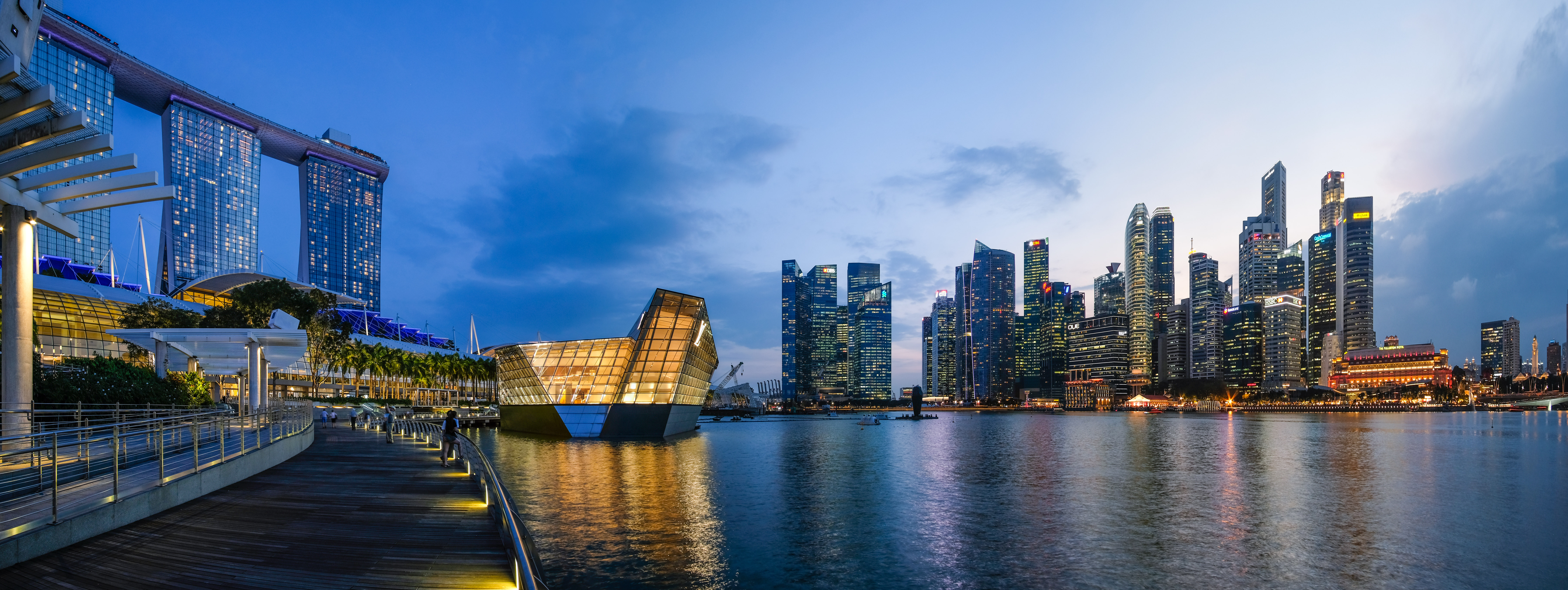
Over a decade of deliberate infrastructure investment has placed thousands of environmental sensors, networked cameras, and data-relay nodes across Singapore's 734 square kilometres — forming a real-time nervous system for one of the world's most densely populated cities.
What drives the network
Three interconnected layers — sensing, decision-making, and data exchange — underpin the city-state's approach to urban management.
Thousands of street-level nodes record air quality, humidity, ambient noise, rainfall intensity, and footfall density. Data flows to centralised repositories at 5-minute intervals.
Adaptive signal controllers at major intersections analyse vehicle density from overhead cameras, adjusting green-phase durations in real time and redistributing flow across parallel corridors.
The Land Transport Authority, National Environment Agency, and Urban Redevelopment Authority publish machine-readable feeds that developers, researchers, and city planners access without restriction.
Tidal gauges at 25 points around the island's perimeter feed water-level readings into the national weather-risk model, enabling 72-hour advance flood-risk alerts for low-lying districts.
The Virtual Singapore project maps every structure above 1 metre in a navigable 3D model updated quarterly from aerial LiDAR surveys and ground sensor feeds.
The OneService mobile application aggregates municipal sensor alerts, bus arrival predictions, hawker centre capacity, and park crowd levels into a single resident interface.
In-depth articles
Each article draws on published government reports, academic research from NUS and NTU, and publicly available data streams.
A look at the hardware rollout, communications protocols, and agency coordination behind Singapore's island-wide network of environmental monitoring nodes.
How adaptive signal control, overhead camera networks, and predictive modelling have changed the way vehicles move through Singapore's road network.
From the national data.gov.sg portal to agency-specific feeds, a survey of the data infrastructure that turns raw sensor readings into actionable urban intelligence.
Questions about the content, corrections to factual information, or requests for additional coverage can be sent through this form.